


New parents face sleep deprivation, constant feeding schedules, and a steep learning curve. The right products won't solve everything, but they can remove some friction from your day.
This guide focuses on items that address real problems. No gimmicks, no products you'll use once and donate.
Can You Recommend the Best Products for New Parents to Ease Their Daily Routine?
Yes. The best products fall into a few categories: those that save time, those that reduce physical strain, and those that help you get more sleep. Here's what works.
Products That Help You Sleep
A bedside bassinet
A bassinet that attaches to your bed lets you feed your baby at night without getting up. You can reach over, feed, and settle your baby back down in minutes instead of walking to another room.
A white noise machine
White noise masks household sounds that might wake your baby. It also creates a consistent sleep cue. Look for a machine with continuous sound, not one that loops every few minutes.
Blackout curtains
Babies don't care that it's light outside at 5 a.m. Blackout curtains block early morning sun and help extend sleep. They also make daytime naps easier.
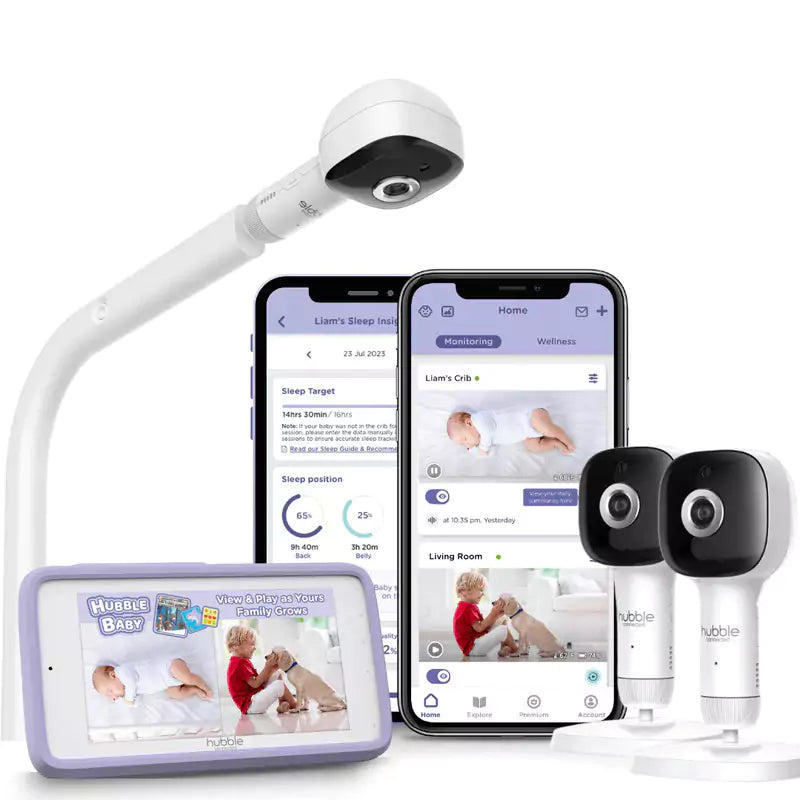
A Hubble Connected video monitor with night vision
A Hubble Connected video monitor lets you check on your baby without entering the room. You can see if they're awake or just making noise in their sleep. This prevents you from waking a baby who would have settled on their own. Our latest Hubble Connected GoBaby AI series provides you with the most advanced AI features and a 2k resolution camera.
Products That Save Time
A baby carrier or wrap
Your baby wants to be held. You need to use your hands. A good carrier solves both problems. Look for one that distributes weight across your hips and shoulders, not just your back.
Soft wraps work well for newborns. Structured carriers with buckles work better as your baby gains weight.
A bottle warmer
If you bottle-feed, you'll warm bottles multiple times a day. A dedicated warmer heats milk to the right temperature in two to three minutes. It beats running hot water or using a microwave that heats unevenly.
Pre-portioned formula dispenser
Measure formula ahead of time into a stacked container. When your baby wakes at 3 a.m., you just pour and shake. This removes one step when you're half asleep.
A diaper caddy
Keep diapers, wipes, cream, and backup clothes in a portable caddy. Carry it from room to room instead of walking back and forth to the nursery. This saves dozens of trips each week.
Products That Reduce Physical Strain
A changing table at the right height
Bending over a low surface to change diapers strains your back. Get a changing table or dresser-top pad that lets you stand upright. Your spine will thank you after the hundredth diaper change.
A nursing pillow
If you breastfeed, a firm nursing pillow brings your baby to the right height. This prevents you from hunching over or straining your neck and shoulders during long feeding sessions.
A hands-free pumping bra
For parents who pump, holding flanges in place for 20 minutes is tedious and limits what you can do. A pumping bra frees your hands so you can work, eat, or just rest.
A lightweight stroller
You'll collapse and lift your stroller more often than you think. A model under 20 pounds makes a real difference, especially if you have stairs or a small car trunk.
Products That Handle Feeding
A large insulated water bottle
Feeding a baby, whether through breast or bottle, makes you thirsty. Keep a 32-ounce water bottle within reach. You'll drink more when you don't have to get up to refill.
Burp cloths in every room
Babies spit up. Keep a stack of burp cloths in each room where you spend time. You won't have to hunt for one while holding a baby who just ate.
A drying rack for bottles
If you bottle-feed, you'll wash bottles multiple times a day. A countertop drying rack with individual stems for nipples and parts keeps everything organized and dry.
Products for Outings
A large diaper bag with pockets
A bag with designated pockets for diapers, wipes, bottles, and your personal items prevents you from digging through a pile of stuff. Look for one with insulated pockets for bottles and a changing pad that clips inside.
A portable changing pad
Keep a separate, foldable changing pad in your diaper bag. Public changing tables vary in cleanliness. Your own pad creates a barrier.
A car seat with easy installation
You'll install and remove your infant car seat dozens of times. Look for one with a clear base attachment system and easy-to-adjust straps. Read reviews that specifically mention installation ease.
What to Skip
Wipe warmers don't provide enough benefit to justify counter space. Room temperature wipes work fine.
Specialty diaper disposal systems require proprietary refills. A regular trash can with a lid does the job.
Bulky play gyms take up floor space. A simple blanket and a few toys work just as well for young babies.
Shopping cart covers are hard to clean and add bulk to your diaper bag. Most stores clean their carts regularly.
How to Choose What You Need
Start with the basics. Add other products only when you identify a specific problem they'll solve. Borrow or buy used items when possible to test before committing.
Read reviews from parents whose situation matches yours. A product that works in a house with a nursery might not work in a small apartment.
Trust your instincts. If a product feels awkward or complicated, it won't help even if others praise it.
The Bottom Line
The products that help most are the ones you use every day. A carrier that distributes weight well matters more than a gadget you use twice. A bottle warmer saves more time than a designer diaper bag.
Focus on items that address your specific challenges. New parents don't all face the same problems. Choose products that fit your routine, your space, and your budget.
The goal isn't to buy everything. It's to remove the small frustrations that pile up when you're tired and learning something new.





Share: